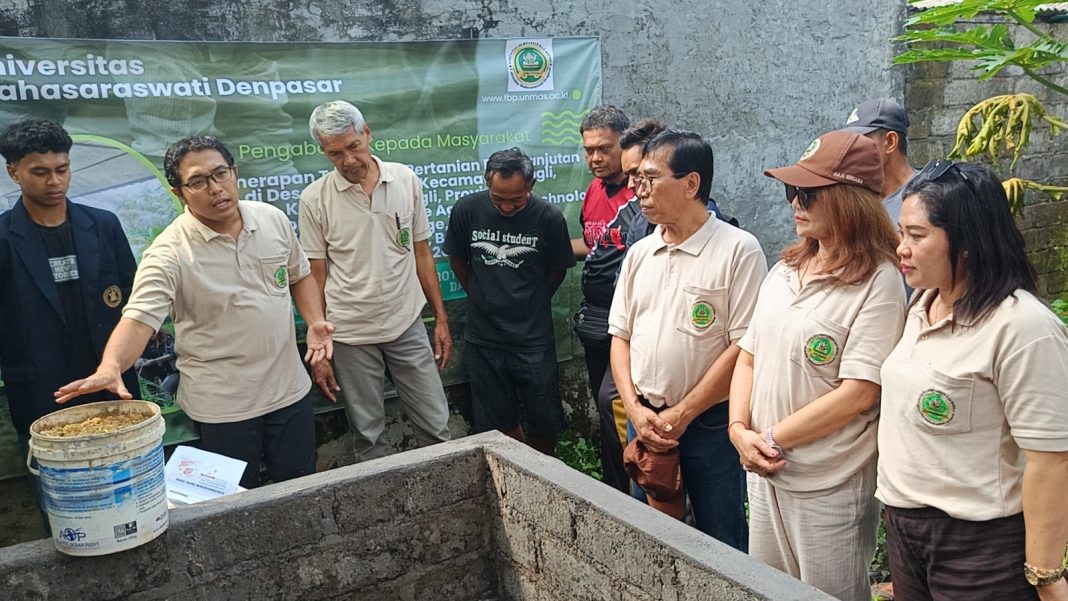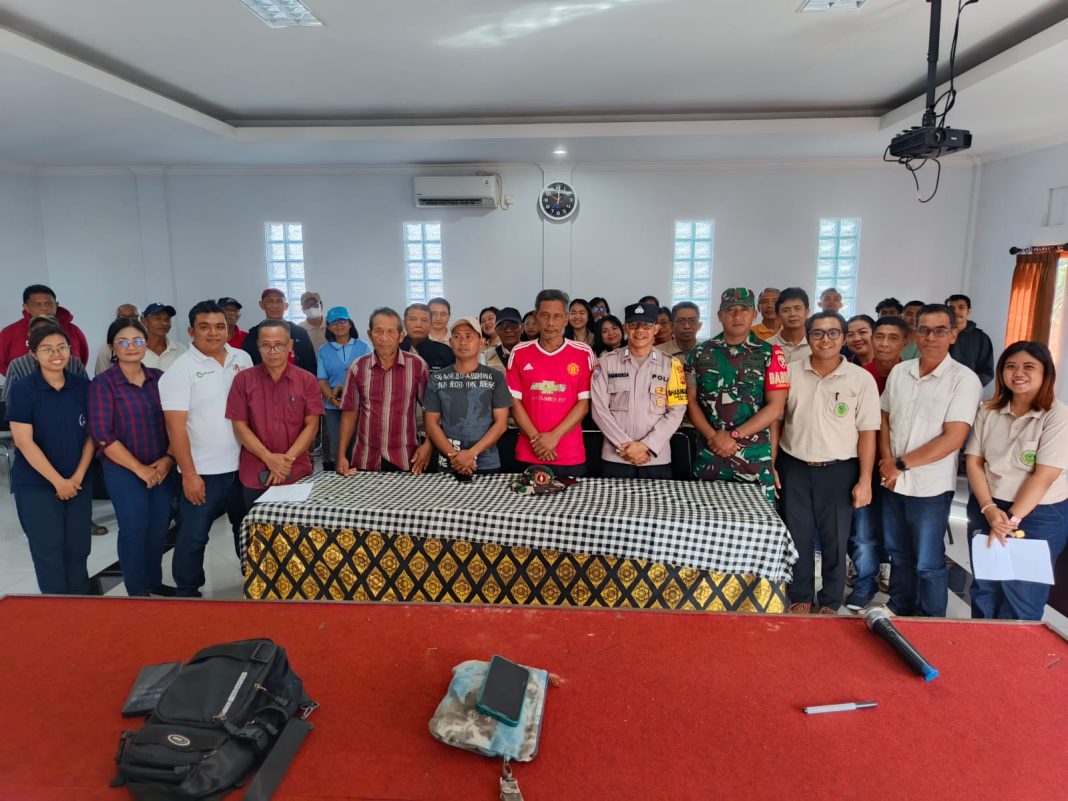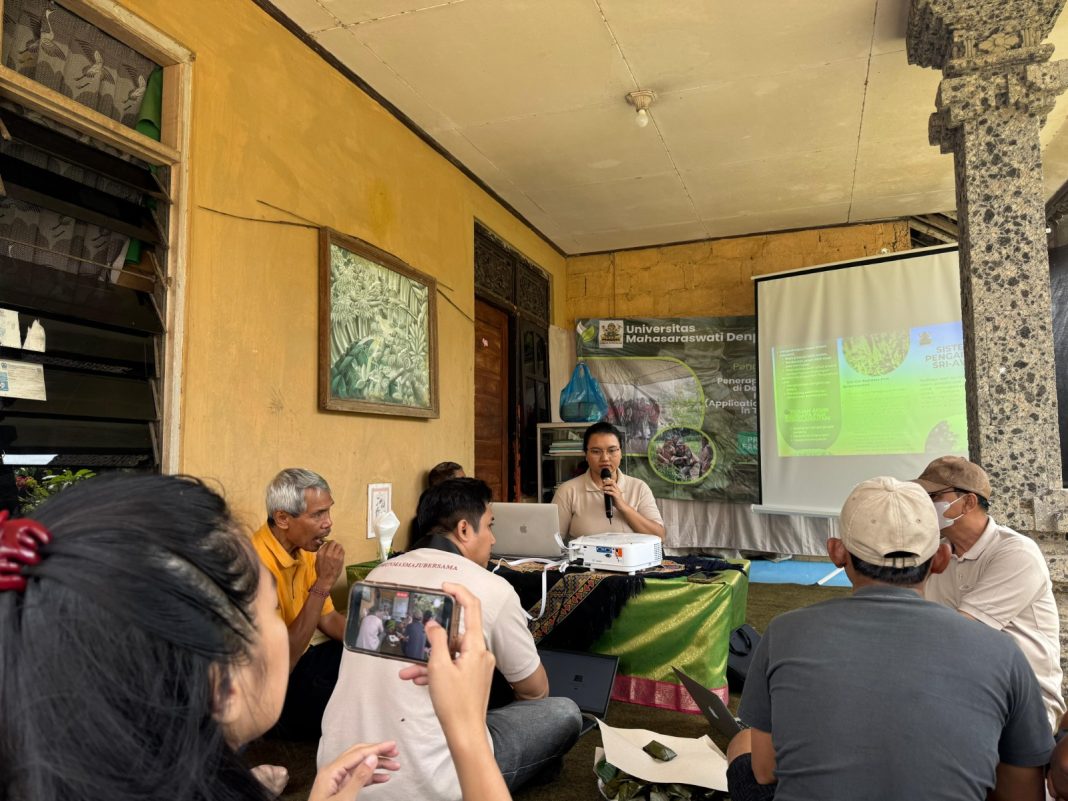
BANGLI, Bali (BPN) – This community service activity, held in Tamanbali Village, Bangli Regency, featured speakers Luh Putu Yuni Widyastuti, S.P., M.Si., Cokorda Javandira, SP, MP., and Ir. I Made Suryana, M.Si., aimed to increase farmers’ capacity in implementing sustainable rice cultivation as an effort to optimize agricultural yields amidst the challenges of climate change and limited natural resources, particularly water.
Through interactive extension methods, participants were introduced to rice cultivation concepts and practices that prioritize not only yield but also efficiency and sustainability of the agricultural production system.
The main material presented covered Alternate Wetting and Drying (AWD) water management, which has been proven to save irrigation water usage by up to 30% without reducing land productivity.
This AWD technique also helps reduce greenhouse gas emissions from the agricultural sector and encourages efficiency in nutrient uptake.
In addition, participants were also given an understanding of the importance of using drought-resistant rice varieties, such as Inpari 42 GSR and Inpari 48, which are more adaptive to water stress conditions, so they can be a solution for rain-fed rice fields.
Interestingly, this activity also introduced the concept of amphibious rice, namely upland rice that can be planted in rice fields with limited irrigation conditions.
One example is the IPB 9G variety, which has the advantage of being drought tolerant and capable of high production in both rice fields and dry land.
The application of this variety is very relevant to the conditions of farmers in Tamanbali Village who face fluctuations in irrigation water supply.
The evaluation results showed that more than 50% of participants experienced increased knowledge based on pre- and post-test results, and were able to re-explain the basic principles of sustainable rice cultivation.
Discussions during the extension demonstrated farmers’ enthusiasm for efficient water management and the use of adaptive varieties such as Inpari 42 GSR and IPB 9G.
This activity had an initial positive impact in building farmers’ awareness and readiness to adopt more environmentally friendly and sustainable agricultural practices.
This activity is the result of a collaboration between the Faculty of Agriculture and Business, Mahasaraswati University, the Bangli District Government, Bangli Regency, the Umajero Subak Community, Tamanbali Village, and Bulacan Agricultural State College, Philippines.