BANGLI, Bali (BPN) – The implementation of an integrated farming system aims to maximize yields from all components of the farming system to increase stable income, rejuvenate or improve the productivity of the farming system and achieve agro-ecological balance, avoid the buildup of pests, diseases, and weeds through natural cropping systems and maintaining low intensity levels, and reduce the use of chemicals to provide healthy, chemical-free, and environmentally friendly agricultural products.
Environmental damage that impacts environmental sustainability requires agricultural and environmental observers to seek alternative ways to improve the environment and restore soil fertility.
One concept of environmentally friendly and sustainable agriculture is balancing the use of organic and inorganic fertilizers.
Farmers’ efforts to increase crop yields, such as applying chemical fertilizers and implementing intensive land management systems, can reduce the soil’s organic matter content and cause soil compaction and degradation.
Plant nutrient requirements must be met while maintaining environmental sustainability.
Vermicompost is compost produced from the decomposition of organic materials by earthworms.
Vermicompost is a combination of the Latin words “Vermi,” meaning worm, and “Compost,” meaning the decomposition of organic materials.
Vermicompost can literally be defined as the decomposition of organic materials by earthworms.
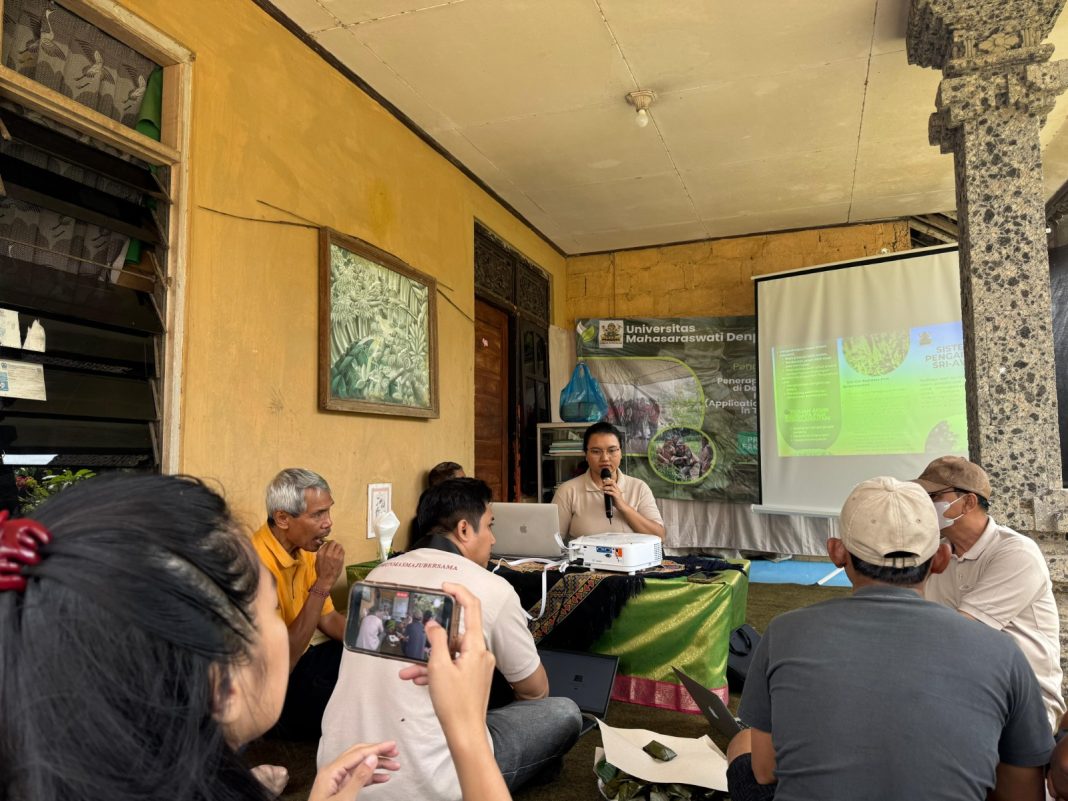
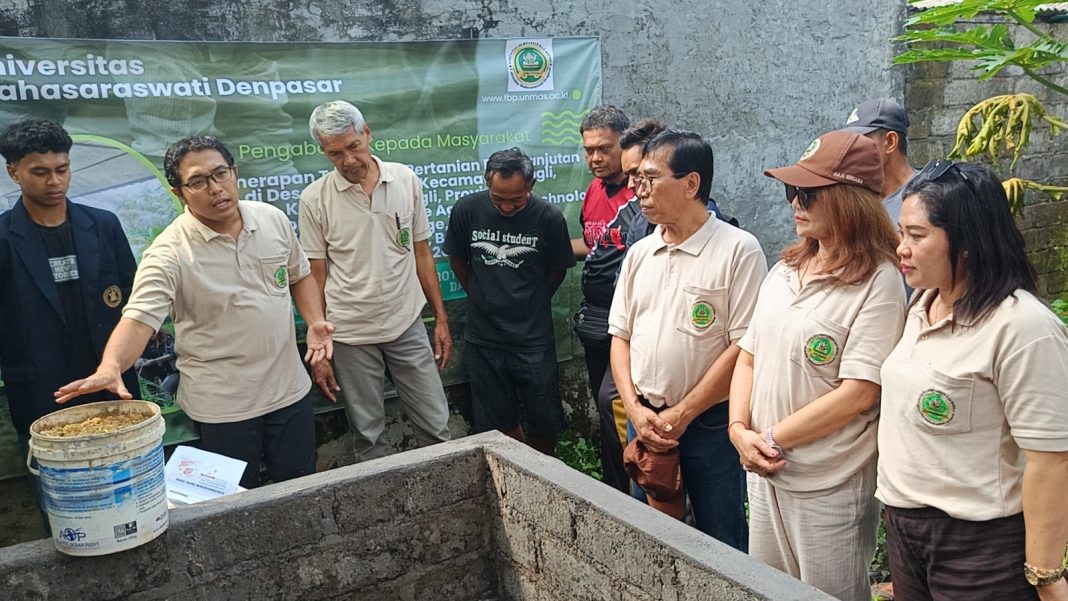
Vermicompost Technology Extension is an educational activity for the community, farmers, and partner groups of Krama Subak Umajero in Taman Bali Village, Bangli Regency, on how to process organic waste using earthworms to produce high-quality compost.
The vermicompost pond measures 2 meters long, 1.5 meters wide, and 60 cm high. Cokorda Javandira says, the earthworms used in this vermicomposting activity are Eudrilus eugeniae, also known as African Night Crawlers.
The vermicompost media uses cow dung, oyster mushroom baglog waste, banana stem waste, and rice straw.
The objectives of this Vermicompost Technology Extension activity are as follows:
- Reduce organic waste in the environment, such as rice straw, oyster mushroom baglogs, cow dung, pig manure, banana stem waste, chicken manure, and household waste.
- Produce environmentally friendly organic fertilizer.
- Empower communities to increase income through worm cultivation and vermicompost production.
This activity is the result of a collaboration between the Faculty of Agriculture and Business, Mahasaraswati University, the Bangli District Government, Bangli Regency, the Umajero Subak Community, Tamanbali Village, and Bulacan Agricultural State College, Philippines.