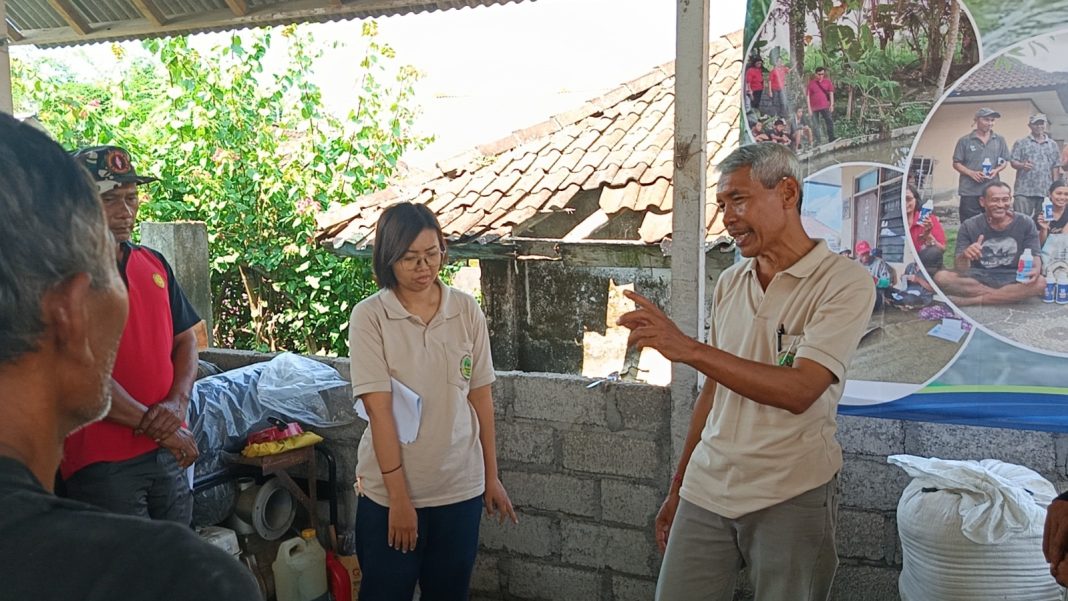
BANGLI, Bali (BPN/adv) – Rice cultivation extension is an activity that provides information and training to farmers on proper rice planting methods to increase production and yields.
This activity can include delivering material on cultivation techniques, plant care, pest and disease control, and the use of appropriate technology.
The following are some important aspects of rice cultivation extension:
- Land Preparation:
Land Clearing: Removing crop residues, weeds, and other debris from rice fields.
Soil Cultivation: Plowing and harrowing the soil to create ideal conditions for rice root growth.
- Seed Selection:
Superior Varieties: Use high-quality rice seeds that are resistant to pests and diseases, and suited to local environmental conditions.
Nursery: Sowing rice seeds to obtain healthy, ready-to-plant seedlings.
- Planting:
Planting System: Choose the right planting system, such as jajar legowo (traditional row spacing), to increase plant population and yield.
Planting Spacing: Adjust the appropriate spacing to provide sufficient growing space for the plants.
Fertilization: Apply base and supplemental fertilizers according to the plants’ needs.
- Plant Care:
Irrigation: Ensure adequate water availability, either by flooding or by using a “macak-macak” system.
Weeding: Remove weeds regularly to reduce competition for nutrients.
Pest and Disease Control: Implement integrated pest and disease prevention and control measures, including the use of natural pesticides.
- Harvesting:
Harvest Time: Determine the appropriate harvest time based on plant age and grain condition.
Harvest Technique: Use proper harvesting techniques to minimize yield losses.
Drying and Storage: Dry the grain to the appropriate moisture content and store it properly.
Sustainable agriculture is an agricultural system that meets current food needs without compromising the ability of future generations.
One practice that supports this system is the use of rice straw mulch. Rice straw mulch is readily available at Subak Uma Jero in Taman Bali Village, Bangli District, as it is a rice producer.
Using rice straw as mulch offers various ecological and agronomic benefits, including:
- Suppresses weed growth by blocking sunlight from reaching the soil surface.
- Reduces groundwater evaporation, resulting in efficient water use.
- Stabilizes soil temperature and protects plant roots.
- Adds organic matter to the soil as the straw decomposes, improving fertility and soil microbial activity.
- Reduces soil erosion by protecting the surface from direct rainfall.
- Recycles agricultural waste, thus reducing environmental pollution from straw burning.
How to implement rice straw mulch:
- Prepare the land as usual.
- Spread dry rice straw evenly between rows of plants or cover the entire surface of the land (with a thickness of 5–10 cm).
- The ideal application time is after planting or before the dry season.
This activity is the result of a collaboration between the Faculty of Agriculture and Business, Mahasaraswati University, the Bangli District Government, Bangli Regency, the Umajero Subak Community, Tamanbali Village, and Bulacan Agricultural State College, Philippines.