


UBUD, Bali (BPN) – Anomali Coffee’s commitment to sustainable practices led to exploring innovative solutions for upcycling coffee waste such as coffee skin and coffee waste, joining forces with Bell Society and the British Councils in an exciting collaboration that redefines sustainability and art using coffee grounds.
This unique partnership, supported by the British Councils’ Coffee Culture campaign, aims to revolutionize recycling and artistic expression by transforming coffee waste into captivating art installations.
By transforming coffee grounds and coffee skin into scientific leather, they are pushing the boundaries of what is possible in sustainability and art.
“The art installations resulting from this collaboration are a visual representation of the harmonious convergence between sustainability, art, culture, and coffee. Each piece serves as a powerful reminder of the transformative potential of upcycling and the immense creative possibilities found within the world of coffee,” said Irvan Helmi, Co-founder of Anomali Coffee on Sunday (6/25/203).
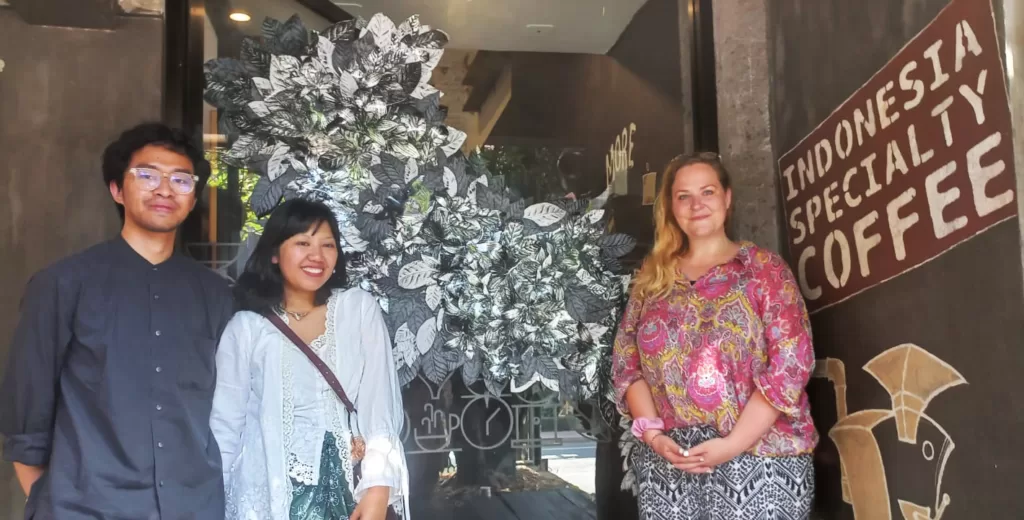
CEO & Cofounder Bell Living Lab Arka Irfani explained that Bell Living Lab is a visionary biomaterial company dedicated to transforming coffee grounds into coffee leather, a sustainable biomaterial with properties similar to traditional leather.
Through its innovative processes, Bell Living Lab promotes the use of recycled materials in art, design, and everyday products, redefining the possibilities of sustainable biomaterials.
“One of our products displayed here is the M-Tex, which is made from coffee skins and coffee grounds. In addition, with Rachel from the British Council, we create a symbol of the sustainability movement in the form of an art installation from coffee skins, coffee grounds, and eco foil,” Arka said.
The British Council’s Coffee Culture Campaign itself is a collaboration between eco-artist Rachel Ella Taylor and biomaterials producer Bell Society and Anomali Coffee. Together they are developing a circular economy project themed around coffee.
With shared values on sustainability and producing innovative and beautiful materials/items from waste, together they are co-creating an art installation from organic and plastic coffee waste materials through public workshops with coffee shop customers in Bali.
“By integrating sustainable practices and artistic innovation, the campaign aims to shed light on the cultural impact of coffee and its potential for positive change,” Rachel said.
Meanwhile, Marketing Manager Anomali Coffee Nadya Eka Putri explained that Anomali Coffee has been a curator of Indonesia specialty coffee since 2007 and is dedicated to promoting and curating Indonesia Specialty Coffee through education, craftsmanship, and community.
With a focus on quality, sustainability, and customer satisfaction, Anomali Coffee sources premium coffee beans from across Indonesia, fostering sustainable relationships with local farmers.
Through educational programs and immersive experiences, Anomali Coffee aims to deepen the understanding and appreciation of Indonesian coffee.
Committed to sustainability and innovation, Anomali Coffee strives to push the boundaries of the coffee experience while raising awareness about environmental responsibility.
“With every sip of Anomali Coffee, customers contribute to this collective effort. Together, let’s embrace sustainable living, sip by sip, and create a world we can be proud to pass on to future generations,” Nadya said.
Nadya revealed that the workshop was followed by 30 participants, and art installation and products resulting from the workshop can be seen at Anomali Coffee Ubud.

 - Anomali Coffee's commitment to sustainable practices led to exploring innovative solutions for upcycling coffee waste such as coffee skin and coffee waste, joining forces with Bell Society and the British Councils in an exciting collaboration that redefines sustainability and art using coffee grounds.)